
Will Homeowner’s Insurance Cover Tree Removal in Texas
- Apr 21
- 5 min read
If a tree falls on your property, one of the first questions that usually comes next is not about the tree.
It is about the cost.

Most homeowners in Texas want to know the same thing right away. Will insurance cover this, or am I paying out of pocket?
The honest answer is this. Sometimes yes, sometimes no. It depends on where the tree fell, what it damaged, why it fell, and what your policy includes.
That is why two neighbors can have similar situations and very different claim outcomes.
Let’s walk through how it usually works in Texas so you know what to expect.
When Insurance Usually Covers Tree Removal
In many cases, homeowner’s insurance may help cover tree removal when the fallen tree damages a covered structure.
That usually means:
Your home
Your garage
A fence in some situations
A detached structure listed on the policy
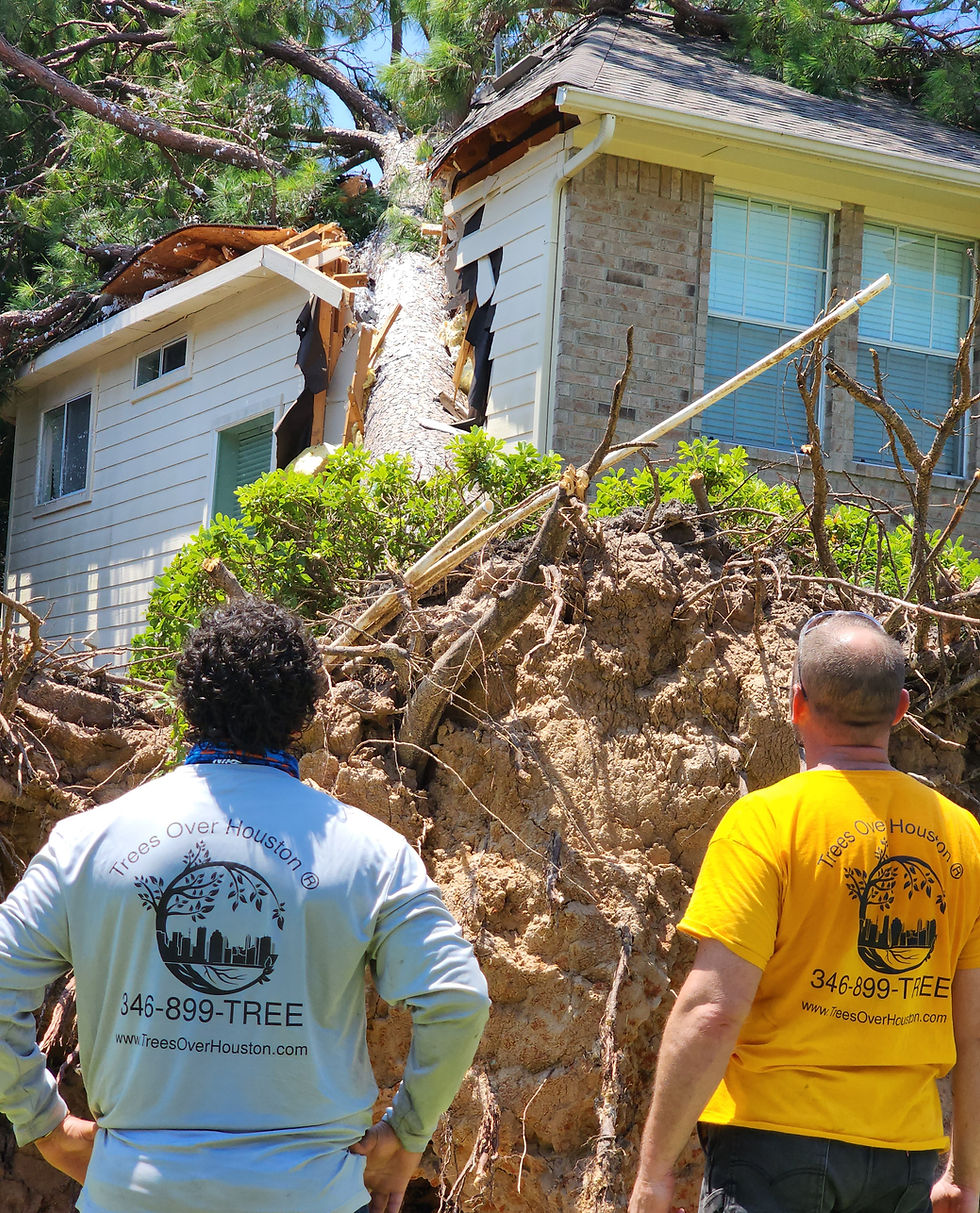
For example, if a storm pushes a tree onto your roof in Houston, many policies may cover part of the removal cost along with repairs to the damaged structure.
This is one of the most common scenarios after severe weather.
When Insurance May Not Cover Tree Removal
This is where many homeowners get surprised.
If a tree falls in the yard and does not damage anything, coverage may be limited or not apply at all.
For example:
The tree falls across the lawn
It lands in the backyard without hitting structures
It blocks part of the driveway but causes no property damage
In those situations, removal often becomes the homeowner’s responsibility.
That is why location matters just as much as the fall itself.
Storm Damage vs Neglect
Insurance companies often look at why the tree fell.
If a healthy tree comes down during a storm, that is commonly treated differently than a tree that was clearly dead, rotted, or visibly neglected for years.
If a tree had obvious decay, large dead limbs, or major lean that was ignored, questions may come up during the claims process.
This is one reason regular inspections matter.
We often tell Houston homeowners that documenting the condition of trees before hurricane season can help later if damage happens.
What If My Neighbor’s Tree Falls on My House
This is one of the most misunderstood situations.
Many people assume the neighbor automatically pays.
That is not always how it works.
In many storm related cases, your own homeowner’s insurance may handle damage to your property first, regardless of where the tree came from.
However, if the neighbor was aware the tree was hazardous and ignored the issue, liability may become a factor.
Each case depends on the details.
That is why photos, prior communication, and inspection records can matter.
What Texas Homeowners Should Do Immediately After a Tree Falls
The first few steps matter.
Stay clear of the damaged area
Do not approach hanging limbs or unstable trunks
Take photos from multiple angles
Document roof, fence, or structural damage
Call a qualified tree service to make the area safe
Notify your insurance provider
Trying to rush cleanup before documentation can create problems later.
If a tree is on your home or blocking access, emergency removal may be the priority.
You can learn more on our Emergency Tree Removal in Houston page
Does Insurance Cover Preventative Tree Removal
Usually, no.
Most homeowner policies are designed to cover sudden accidental damage, not preventative maintenance.
That means if a tree is leaning, dead, or obviously risky before it falls, removing it proactively is often an out of pocket expense.
But that expense is usually much smaller than waiting for storm damage.
We have seen homeowners spend a few hundred dollars on preventative work instead of dealing with thousands in emergency removal and repairs later.
How Much Tree Removal Will Insurance Pay For
Coverage amounts vary by policy.
Some policies place limits on debris removal or tree removal expenses. Others may pay more when a covered structure is damaged.
This is why it is important to read your specific policy and ask questions.
The Texas Department of Insurance provides general homeowner claim guidance.
No two policies are exactly alike.
Why Houston Homeowners Ask This So Often
Houston weather creates regular concern.
Heavy rain
Saturated soil
Strong wind events
Tropical storms
Hurricane season
That combination means trees fall here more often than in many markets.
Which means insurance questions come up every season.
For homeowners in areas with mature trees like The Heights, Bellaire, Memorial, and older neighborhoods across Houston, this topic is especially relevant.
Can a Tree Be Saved Instead of Removed
Not every storm damaged tree needs to come down.
Sometimes a tree can be professionally trimmed, stabilized, or partially reduced.
Other times removal is the safest option.
That depends on:
Root damage
Trunk splitting
Canopy loss
Proximity to structures
Future risk potential
A professional evaluation gives you a realistic answer.
How to Protect Yourself Before Storm Season
The best insurance strategy is often prevention.
Have mature trees inspected before hurricane season
Remove dead limbs
Trim overextended branches
Address visible decay early
Keep records of maintenance
Healthy maintained trees are less likely to fail and easier to defend during claims discussions.
Frequently Asked Questions
Does homeowner’s insurance cover a tree that fell in my yard
Usually only if it damaged a covered structure, though policies vary.
Will insurance pay if a tree hits my fence
Sometimes. Coverage depends on policy details and cause of loss.
What if my neighbor’s tree fell on my house
Your insurance may handle your damage first, then determine liability if needed.
Does insurance cover removing a dead tree before it falls
Usually no. Preventative removal is commonly considered maintenance.
Should I call insurance or a tree company first
If there is immediate danger, call a tree company first to stabilize the situation.
Do I need photos before cleanup
Yes. Documentation is always smart.
Final Thoughts From a Texas Homeowner Perspective
Tree damage is stressful enough without guessing how insurance works.
The truth is simple. Coverage often depends on what was damaged, how the tree fell, and what your specific policy says.
If a tree is already showing warning signs, waiting for insurance to solve the problem later is rarely the best plan.
Preventative care is usually cheaper, safer, and less stressful than emergency cleanup.
If you are dealing with a fallen tree in Houston or wondering whether a risky tree should be removed before storm season, we can help you assess the situation honestly and safely.
Give us a call today and let’s help you protect your property before the next storm makes the decision for you.


Comments